
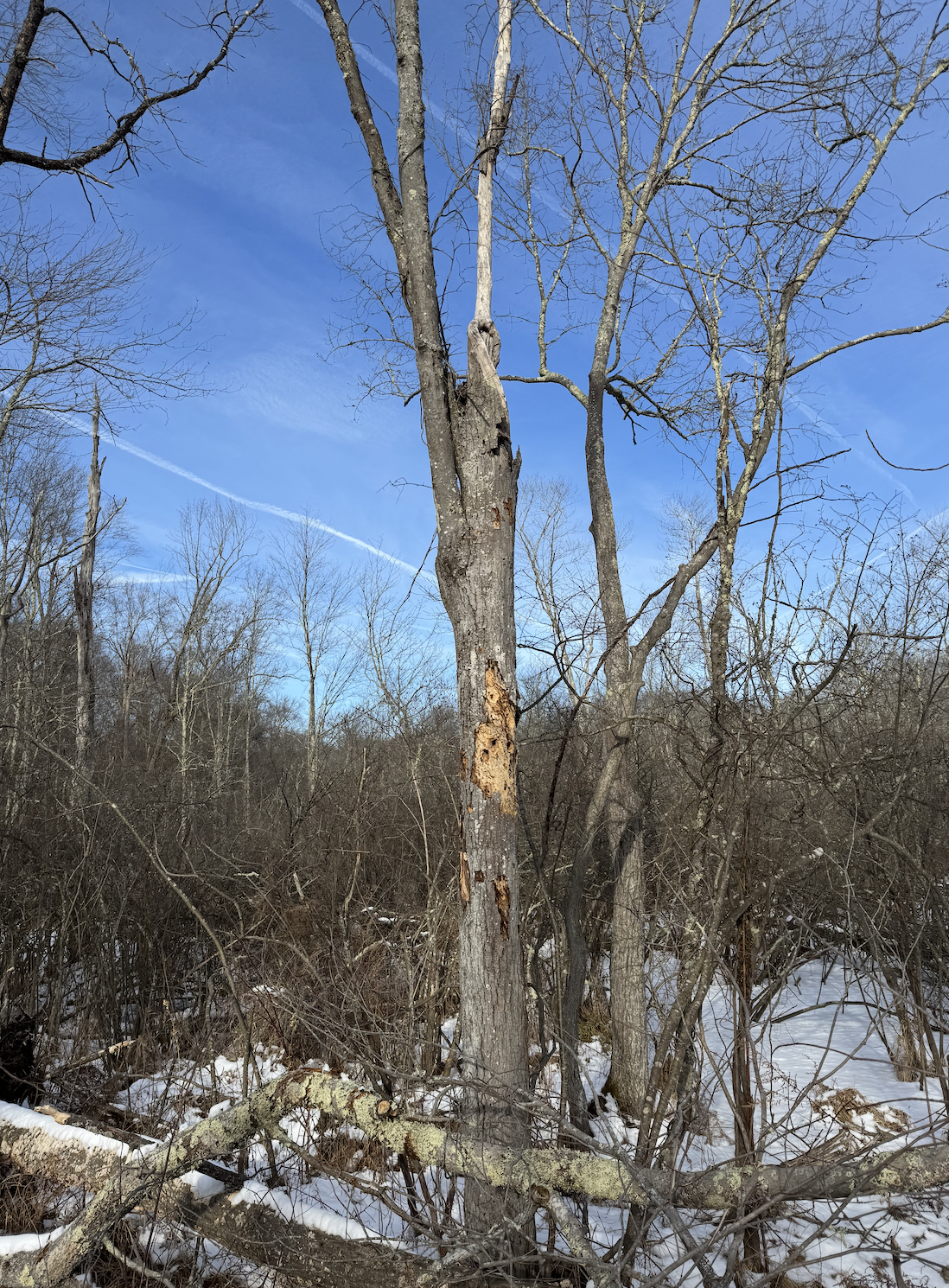
What is a standing dead tree called?
I remember when, 25 years ago, a new friend invited me to visit her property designed by a prestigious landscape architect. As we toured the garden, she pointed to several standing dead trees which no longer had any branches, and proudly admired what she referred to as “snags”. The unattractive snags appeared incongruent with the elegant planting scheme of the garden. I had never heard of the term snag, nor was I familair with the idea of intentionally leaving dead trees in place as something beneficial. That experience initiated my ecological awareness, and I shifted to an aesthetic that values sustainable landscaping and environmental stewardship, and at the same time maintains the grace and beauty of the landscape.
Ecological benefits of standing dead trees
The story of tree snags—standing dead trees—is about ecological regeneration. Trees can provide more habitats for wildlife dead than when they are alive. They are called “wildlife trees” because they create an environment in forests and home landscapes that supports a healthy ecosystem by providing food and shelter to millions of different animal species. “Birds, small mammals, and other wildlife use snags for nests, nurseries, storage areas, foraging, roosting, and perching.”, as stated on the website for the Washington Department of Fish and Wildlife.
“According to the U.S. Forest Service, this includes about 85 species of birds, at least 50 mammals, and about a dozen reptiles and amphibians that rely on dead trees for survival. Then there are the dozens of invertebrates such as millipedes, beetles, spiders, worms, ants, bees, and more who call dead trees home or a snack bar. (Plus countless microscopic species essential to the natural community.) “, writes Wild Ones Organization former director, Donna VanBuecken.
The benefits of a snag become more extensive as it ages. “Snags undergo a series of changes, from the time they begin to die until they finally collapse, and each stage of decay has particular value to a whole host of different animals with unique needs.” as reported by the Society for the Protection of New Hampshire Forests.
How Long Can a Dead Tree Remain Standing?
Some can remain intact for 100 years or more, while others decay faster and break down within two to 10 years. “Each species has its unique lifespan and rate of decay that determine how long it will persist once it is deceased.”, according to Acorn Tree Care in Georgia.
And while it can be decades before a snag falls to the ground, it can lie for decades more as it continues to provide benefits to the ecosystem until it has completely decomposed. In this final stage, it becomes a “nurse log” as bacteria, fungi, and insects continue to break down the wood, and convert it into nutrient-rich organic matter that enriches the soil.
Snags in your landscape
Property owners usually remove dead trees. As current understanding of the importance of snags in our ecosystem grows, perhaps the way we manage them will grow, too. While we are used to looking at a dead tree and finding the appearance unsightly, we can become accustomed to a new aesthetic when our awareness is expanded. Emphasizing the importance of snags, the CT DEEP Snags for Wildlife fact sheet states, “The removal of snags can negatively impact wildlife populations that are dependent on them as essential habitat components.” They recommend maintaining several snags per acre to ensure a healthy, functioning forest ecosystem. This applies to backyard habitats in addition to forest management. If a dead tree does not pose a fall risk to buildings or power lines, homeowners can consider snags as an alternative to paying for dead tree removal, although an arborist might be needed to cut down tall tree tops and branches. Ideally, for maximum wildlife benefit, snags should be greater than 15 inches in diameter and taller than 10 feet.
“The science that studies these relationships and the processes linking each living thing to the physical and chemical environment is ecology—the science of planetary housekeeping. The First Law of Ecology: Everything Is Connected To Everything Else.”
Barry Commoner (1917-2012), environmental scientist